Managing changes in electrical control system documentation

Learn how to manage documentation changes in industrial control systems (ICS), avoid costly engineering errors, and improve workflows.
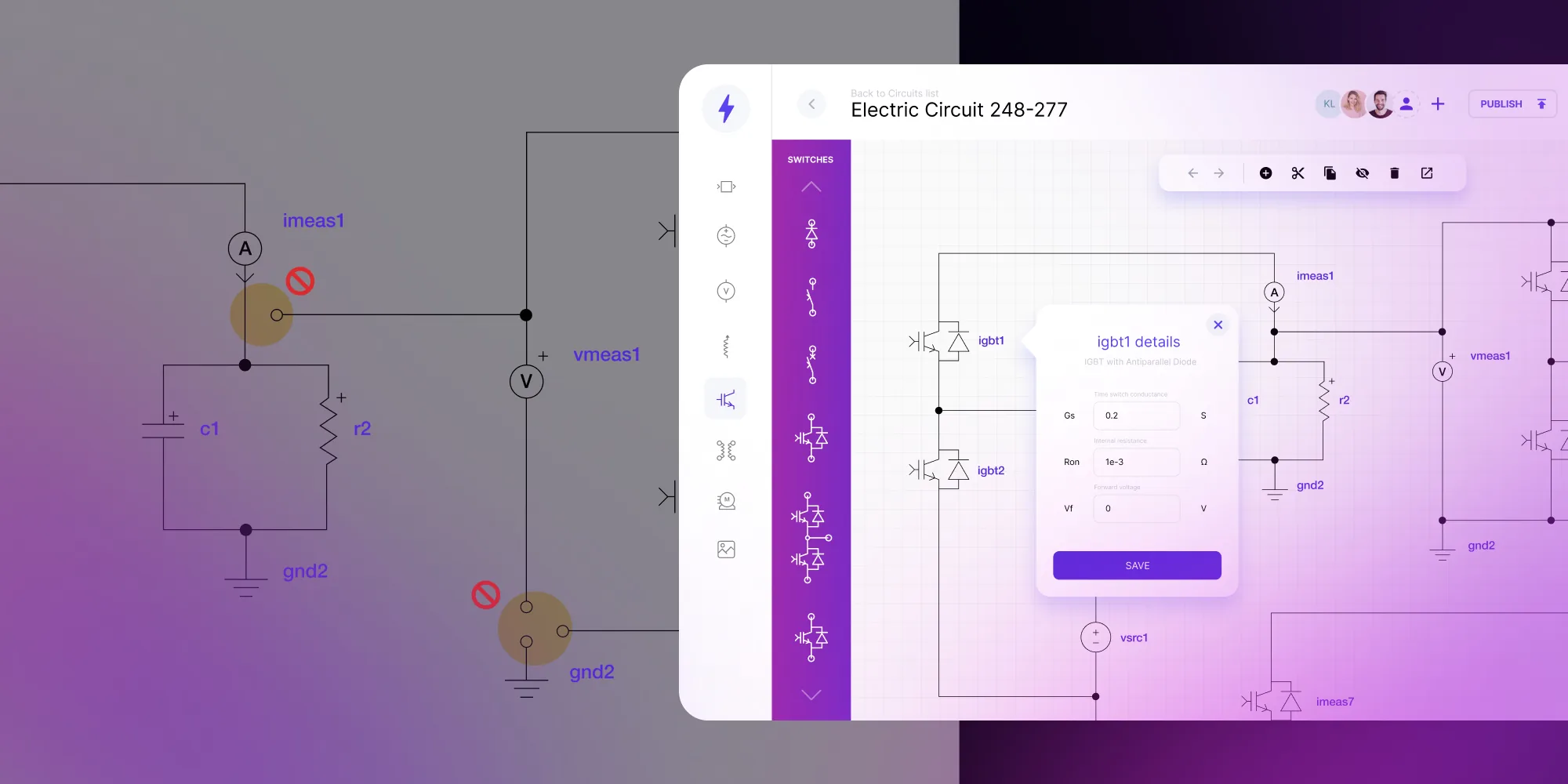
Managing changes in complex engineering environments is difficult when documentation, approvals, and updates are handled manually. Research shows that up to 30% of engineering project effort is lost to rework caused by documentation inconsistencies and late design changes. Structured workflows, centralized documentation, and automated change tracking help teams reduce errors, speed up updates, and collaborate more effectively.
Modern electrical plants rely on software as much as on machines. Electrical control systems coordinate sensors, motors, safety components, and PLCs. Every change – even a small update – must be reflected in documentation. When documentation falls behind, teams lose visibility into how the system actually works. This is why change management matters. Structured documentation management helps teams track design decisions and maintain compliance.
This article is for automation engineers, technical managers, and engineering team leaders working with industrial control systems (ICS). It explains key documentation challenges and shows how structured workflows and industrial automation integration improve visibility, traceability, and reliability.
Why change management matters in electrical control systems?
Industry research shows that up to 30% of engineering and construction project effort is lost to rework and corrections – a pattern Synergy Codes consistently sees in its own projects.
When errors appear during delivery instead of design reviews, they can delay production and increase project costs significantly.
Meanwhile, electrical control systems evolve continuously. Over time, these changes accumulate across multiple tools. Without structured documentation management, teams quickly lose track of the system's real state.
This creates several risks:
- outdated schematics used during maintenance,
- incorrect control logic applied in PLC programs,
- safety compliance issues during audits,
- delivery delays due to documentation errors.
In industrial automation projects, documentation errors rarely fail silently – they usually appear during installation, when every mistake becomes expensive. In large industrial facilities, delays caused by undetected design flaws can cost even millions.
Streamline electrical control system documentation with tools built around your workflows
Check the offer.png)
The growing complexity of industrial automation integration
In electrical control systems, documentation is not just a reference. It becomes the backbone of collaboration between teams: automation engineers, electrical designers, integrators, and maintenance. That's why industrial environments rarely lean on a single system.
Modern system integration in industrial environments combines multiple layers of software and hardware used by different teams, including:
- PLC programming tools,
- live data sources e.g., SCADA, IoT, industrial databases,
- CAD software,
- ERP and production systems.
Each tool manages a fragment of knowledge. Electrical schematics define connections; PLC programs execute control logic, and monitoring platforms display operational data. The problem appears when these systems do not communicate effectively. Then engineers must manually transfer information between tools.
When systems remain disconnected, maintaining accurate documentation management becomes extremely difficult. Even a minor change in a component may require updates across several platforms.
Industrial control system (ICS) – common challenges managing documentation
Managing documentation in an industrial control system environment involves more than updating diagrams. As noted above, engineers must coordinate changes across multiple tools, teams, and compliance frameworks.
Therefore, there are several common challenges that arise in most industrial projects.
Disconnected workflows
Engineering teams involved in electrical control systems often follow separate workflows when implementing system changes. A modification to control logic, wiring, or equipment configuration may pass through a few teams, each working with different procedures and timelines.
Without structured workflow automation, these processes become fragmented. Change requests, approvals, documentation updates, and implementation steps happen in parallel but are rarely synchronized.
As a result, documentation updates become manual tasks performed under time pressure.
Version control problems
Unlike software development, many industrial projects still rely on file-based version control.
Teams may store multiple diagram versions as:
- design_v3_final_FINAL.dwg
- design_v3_final_FINAL_revised.dwg
- design_v4_LATEST.dwg
This approach creates confusion and makes it difficult to determine which document reflects the actual system.
Compliance and validation requirements
Industrial systems must follow strict safety and engineering standards. Electrical control systems may require compliance with regulations such as IEC, IEEE, and ANSI depending on the industry. Those requirements hold better when validation sits in the tool instead of in review cycles.
Without clear documentation management processes, organizations struggle to prove compliance during audits. Missing documentation often becomes a problem when regulators or auditors request evidence. However, then it is too late to complete it correctly.
Resistance to change
A common challenge in engineering organizations is resistance to new tools and processes. Many teams rely on familiar workflows, even if they involve manual documentation updates or fragmented systems. Introducing structured processes or workflow automation can initially raise concerns about complexity or disruption.
Best practices for managing changes in electrical control systems
Teams working with electrical control systems quickly discover that documentation chaos rarely comes from a single mistake. Problems appear when many small changes accumulate across diagrams, PLC programs, and operational systems without control.
Effective change management therefore requires more than good intentions. It requires clear best practices supported by tools and workflows.
The goal is simple – every modification in the system should be visible, traceable, and validated across all teams before it reaches production.
Protect access to engineering platforms
Engineering platforms contain sensitive operational data. Access should be limited to authorized users through role-based permissions and multifactor authentication (MFA). This prevents unauthorized modifications to diagrams, control logic, and documentation – and improves accountability within industrial control system (ICS) environments.
Build a security and documentation culture
Even the best tools will not improve documentation management if engineers see documentation as extra work. In many teams, updating diagrams or change logs is treated as a low priority task.
Companies can improve this by making documentation part of the normal engineering workflow. For example:
- link documentation updates directly to change requests,
- require documentation before approving changes,
- provide simple templates and automated notifications,
- show teams how detailed documentation shortens troubleshooting during the installation process.
When engineers see that good documentation management actually reduces firefighting later, they are much more likely to follow the process.
Execute regular documentation audits
Documentation should be reviewed regularly. Engineering audits help ensure that diagrams, logic, documentation, and component libraries match the actual configuration of electrical control systems. Regular audits also support compliance requirements and simplify regulatory inspections.
Automate engineering workflows
Manual change tracking is one of the biggest sources of errors.
In many organizations, updates still happen mostly through e-mail approvals or spreadsheet tracking. This makes it difficult to analyze system changes and maintain reliable version control. However, workflow automation replaces these manual steps with structured processes.
Industrial automation integration – how custom tools improve documentation management?
Most engineering software used in ICS focuses on one core function – drawing diagrams. While these tools work well for schematics, they rarely support the broader process of whole engineering workflow automation.
That's why many companies start looking for custom solutions built specifically around their work.
| Standard tools | Custom tools | |
|---|---|---|
| Workflows | Generic processes | Adapted to company workflows and teams' needs |
| System integration | Limited integrations | Connected with internal engineering systems |
| Documentation structure | Files stored separately | Centralized documentation linked to system data |
| Change tracking | Often manual | Automated version history and tracking |
| Cooperation | Limited – mostly emails and comments in different file versions | In real-time and on the same files |
What this looks like in practice
A good example is the schematic editor built for OPAL-RT – a platform used by power electronics engineers to design circuit models that run on real-time simulation hardware. In that environment, every component in the diagram represents a real device from a categorized library – not a generic shape. Each block carries its own electrical and non-electrical parameters, validated on the fly against backend rules.
If an engineer tries to create an unsupported configuration, the system blocks it immediately. Not because someone reviews it later, but because the editor and the simulator share the same logic.
The system also supports hierarchical subsystem modeling, so teams can work across complex multi-level designs without losing visibility into the structure. That is the shift custom tools enable. Documentation stops being a deliverable produced at the end of a project. It becomes a continuous output of the engineering work itself.
Centralized documentation
Instead of storing diagrams and engineering data across multiple computers, folders, or tools, a custom platform centralizes documentation in one environment. Schematics, component libraries, and engineering records stay connected through a single data model – not linked files that must be manually synchronized. An interactive single line diagram template shows what that connected model looks like in practice.
In practice, this means:
- A component updated in the library propagates to every diagram that uses it,
- A diagram change triggers a re-validation of associated rules or constraints,
- Component properties, connection logic, and compliance rules live in the same system, not in separate spreadsheets and documents,
- Engineers, operators, and maintenance teams all work from the same source of truth, with access levels matched to their role.
The benefit is not just organization – it is predictability. When everyone sees the same version of the system, coordination stops depending on who forwarded which PDF.
Integrations with engineering systems
Electrical control systems usually do not exist in isolation. Custom tools can integrate with PLC development environments, SCADA platforms, databases, and internal business systems. These integrations support smoother data flow between engineering systems and reduce the need for manual transfers between tools.
Flexible workflow management
Engineering teams often follow different approval processes depending on project size or industry requirements. Custom solutions allow organizations to configure workflows that match their internal processes, from simple change approvals to more complex validation steps. What that build involves is laid out in our step-by-step implementation guide.
Change tracking and audit trails
Traceability is essential in industrial environments. Custom platforms automatically record change history and maintain detailed audit trails. This helps engineering teams understand how a system evolved over time and simplifies compliance reviews or regulatory audits.
A well-designed audit trail captures more than just timestamps. It records:
- Who made the change (user identity tied to role and permissions),
- When it happened (with precision down to the minute),
- What changed (previous value vs. new value, at the property level),
- Why it was made (linked change request, approval reference, or comment),
- What rule or validation was triggered (if the system automatically accepted or rejected the change).
This level of detail changes how engineering teams work. During commissioning, a maintenance engineer can see not only that a parameter was modified, but also which specification version drove that modification and who approved it. During audits, compliance reviews stop being reconstruction exercises. The system already holds the answer.
Your engineers already double-check the drawings.
Find out whyExample features supporting change management
Custom platforms for electrical control systems should support more than approvals and document updates. They should also help engineers, operators, and maintenance teams work with the system after implementation. The most useful features connect change management with daily engineering tasks, reporting, and system visibility.
| Feature | Purpose |
|---|---|
| Automatic change notifications | Alert engineers when diagrams, components, or control logic change, so maintenance and operations never rely on outdated documentation. |
| Digital approvals and signatures | Confirm that changes were reviewed by the right people and create clear approval records for audits. |
| Change request templates | Standardize how updates are proposed and described, making reviews faster and reducing incomplete documentation. |
| Reporting dashboards | Help teams monitor changes across projects, surface recurring bottlenecks, and give managers visibility into workflow health. |
| Live data views linked to diagrams | Connect documentation with real operating conditions, so teams can verify system behavior after changes and troubleshoot with context. |
| Audit logs and change history | Show how the system evolved over time – supporting compliance reviews and post-incident analysis. |
Business benefits of structured change management
For companies designing, integrating, or maintaining industrial systems, these improvements translate directly into business outcomes.
- Fewer engineering mistakes
Work with accurate documentation prevents costly errors during commissioning, maintenance, or system upgrades.
- Faster engineering cycles
Clear workflows and automated approvals reduce time spent on coordinating. Teams can implement modifications faster and move projects forward without delays.
- Ability to handle more projects
With workflow automation teams spend less time on administrative work. This allows companies – such as system integrators or automation contractors – to deliver more projects without increasing team size.
- Better knowledge transfer inside the organization
Structured documentation and change history make it easier for new engineers to understand existing systems. Teams rely less on individual experts and more on accessible data.
- Lower operational risk for clients
Accurate documentation helps maintenance teams troubleshoot systems faster and avoid downtime caused by outdated schematics or configuration errors.
- Stronger credibility with customers and auditors
Companies that maintain clear documentation and change records appear more professional and reliable. This can be an important advantage when working with regulated industries or competing for large automation projects.
In practice, companies that manage engineering changes systematically spend less time correcting mistakes and more time delivering value. This means shorter project timelines, more predictable delivery, and the capacity to take on additional contracts.
Build industrial automation integration that scales
Managing changes in complex engineering systems requires more than updating diagrams. Clear processes, shared documentation, and automated change tracking help teams reduce mistakes, speed up updates, and collaborate more effectively.
Companies that manage engineering changes well deliver projects faster, avoid costly errors, and build stronger trust with clients.
Synergy Codes builds custom software for engineering teams working with complex technical systems and diagrams. If your organization faces problems with manual documentation or fragmented workflows, a tailored tool can significantly simplify how changes are managed.
→ Book an engineering consultation to see how custom solutions can improve documentation management in your projects.
- What is change management in industrial control systems (ICS)?
Change management in industrial control systems (ICS) is the process of tracking and approving changes made to automation systems. It ensures that updates to diagrams, configurations, or control logic are documented and reviewed. This helps teams keep systems stable, avoid mistakes, and understand how the system has changed over time.
- Why is documentation management important in engineering systems?
Documentation management ensures engineers work with accurate system information. When diagrams or configurations are outdated, teams may make changes based on incorrect data – leading to commissioning delays, maintenance errors, or production downtime that costs companies thousands or even millions of dollars.
- What problems occur when engineering changes are not managed properly?
Common problems include outdated diagrams, inconsistent documentation, and lack of real-time visibility into system updates. These issues can delay commissioning, complicate maintenance, and increase the risk of operational errors.
- How can automation improve engineering change management?
Automation helps standardize workflows for submitting, reviewing, and approving engineering changes. It reduces manual work, keeps documentation synchronized, and provides clear visibility into system modifications.
- When should companies consider custom engineering tools?
Companies should consider custom engineering tools when documentation, approvals, and system updates become difficult to manage with standard software. Custom tools help teams work faster, reduce errors, and scale their work.
- Can Synergy Codes build custom tools for electrical control system documentation?
Yes. Synergy Codes designs tailored engineering platforms using proven building blocks and technologies like React Flow, GoJS, and ngDiagram – integrating diagrams, data, and approval workflows in a single environment.
Piotr started as a backend developer, but for five years, mainly associated with the frontend. He is involved in many corporate initiatives supporting process improvement. He manages the "Software Stack Diversity" Guild, which aims to recognize new technologies that enable the company's development in new areas. Piotr specializes in frontend architecture and the broadly understood software development process. Privately, he is passionate about photography, science, and his beloved wife and two kids.

Find how we can help you enhance your software and win more deals
Contact us to discuss your project. After you submit the form, we’ll get in touch with you within 48 hours to arrange a call.